
Ruto and Kindiki Consolidate Power After Key By-Election Victories
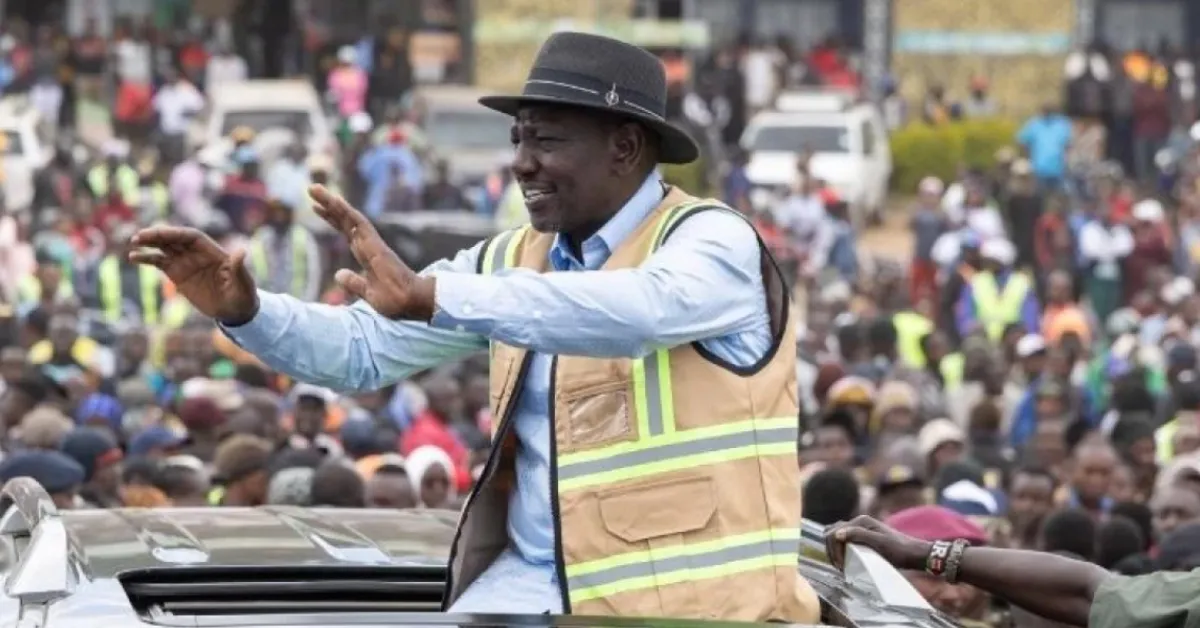
President William Ruto and Deputy President Kithure Kindiki strengthened their political position after securing all parliamentary seats and the Baringo Senate seat in last Thursday’s by-elections.
The victories, achieved under the administration’s cooperation with ODM, are seen as consolidating the ruling coalition’s authority and shaping early dynamics for the 2027 presidential race. For President Ruto, the results offer an opportunity to present the outcome as public support for his message of political unity.
Prof Kindiki’s profile has also risen, particularly in Mt Kenya, where his involvement in the close Mbeere North contest has altered regional power calculations.
During the launch of the Rironi–Mau Summit Highway project in Kiambu County, President Ruto criticised the opposition coalition led by former Deputy President Rigathi Gachagua, accusing it of relying on identity-based mobilisation instead of substantive policy debate.
Senior UDA figures echoed this view, arguing that the results show continued public confidence in the government despite recent political tensions. The opposition disputes the credibility of the by-elections. Dr Mukhisa Kituyi, head of its secretariat, accused the State of using security agencies and financial resources to influence the races, warning that such “material doping” undermines trust in electoral institutions.
The coalition plans to challenge the outcomes in court, especially in Malava and Mbeere North, claiming that the electoral commission failed to prevent intimidation and disruptions. The narrow 494-vote margin in Mbeere North turned the race into a direct contest between Prof Kindiki and Mr Gachagua. UDA’s Leonard Muthende, backed by Prof Kindiki after an intensive 10-day campaign, won the seat.
Mr Gachagua supported Democratic Party candidate Newton Kariuki and hoped the contest would help consolidate his support in Mt Kenya. His loss has raised questions about the strength of his influence, though his allies insist he remains a capable political organiser and argue that victories backed by State resources may be difficult to sustain.
Analysts differ on the long-term implications. Some, including Joshua Nyamori, say the results show that the broad-based coalition is evolving into a functional electoral machine, with voters appearing to prioritise stability and cohesion over personality-driven politics. Others are more cautious.
USIU academic Prof Macharia Munene notes that although Prof Kindiki withstood a significant political test, the narrow win highlights weaknesses the ruling coalition cannot ignore. He adds that the outcome complicates any attempt by the President to sideline his deputy in future political planning.
The by-elections also affect political dynamics beyond Mt Kenya. In Western Kenya, Prime Cabinet Secretary Musalia Mudavadi invested considerable effort in Malava to reinforce his standing within the coalition. Analysts say his influence heading into 2027 will depend on his ability to deliver votes in the region.
Meanwhile, Ford-Kenya’s disappointment in Kabuchai and setbacks for George Natembeya’s Tawe Movement point to continued uncertainty in Western politics.
The emerging landscape indicates that the 2027 election will hinge on stable alliances in Mt Kenya and Western Kenya, both decisive regions in 2022.







Add new comment