
Ruto Launches Sh170bn Road–Rail Expansion in Major Infrastructure Push
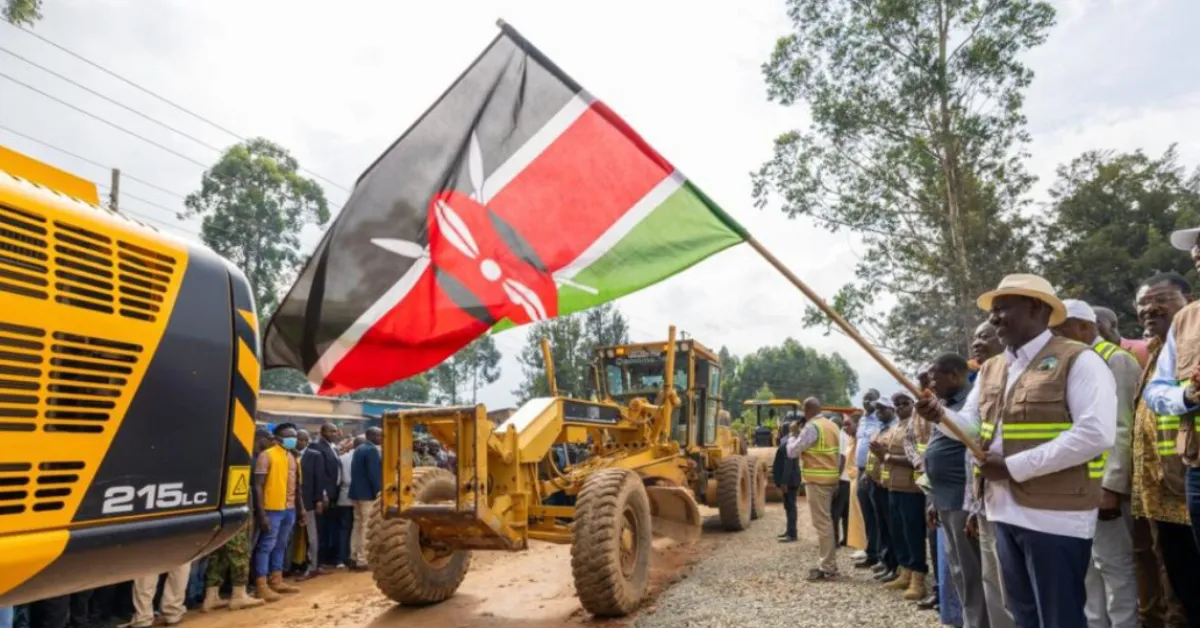
Kenya has begun major road and rail upgrades with the launch of the Nairobi–Nakuru–Mau Summit Road project, a multibillion-shilling scheme led by President William Ruto.
Kenya is advancing a large transport expansion through a Public–Private Partnership valued at more than Sh170 billion, marking one of East Africa’s most significant road investments. Speaking at the commissioning in Kiambu County, President Ruto said the initiative will use private sector participation to deliver major infrastructure without adding pressure to public debt.
The project covers two key corridors: the 175-kilometre Nairobi–Nakuru–Mau Summit route and the 58-kilometre Nairobi–Maai Mahiu–Naivasha section. Both roads will be upgraded into dual carriageways with interchanges, truck lay-bys, pedestrian bridges, improved lighting, and intelligent transport systems.
The improvements aim to support heavy commercial traffic, enhance safety, and strengthen links to the Naivasha Inland Container Depot and emerging industrial zones in the Rift Valley. Officials describe the corridors as vital to regional trade, connecting Nairobi with Uganda, South Sudan, Rwanda, Burundi, and the Democratic Republic of Congo.
By reinforcing the Northern Corridor, the government expects lower transport costs, greater efficiency, and broader economic growth across the region. The road development coincides with plans to extend the Standard Gauge Railway.
Construction of the 475-kilometre Naivasha–Kisumu–Malaba line is scheduled to begin in January 2026 at an estimated cost of $5 billion (Sh645.8 billion). The extension is intended to link Kenya’s rail network to Uganda and deepen regional integration.
Funding for the railway will rely heavily on the Railway Development Levy, which was increased to two percent on imports in late 2024 and is expected to raise about Sh50 billion each year. Transport officials note that additional support from development partners and concessions will be required to complete the project.
Compensation for communities along the route has been included, and feasibility and environmental studies have been completed. The government has also outlined a shift toward sustainable financing by expanding the use of the National Infrastructure Fund and the Sovereign Wealth Fund to reduce dependence on external borrowing.
According to President Ruto, these mechanisms are intended to support industrial development, job creation, and long-term economic stability under the Bottom-Up Economic Transformation Agenda. He has called on contractors and local businesses to maintain transparency and high standards, stating that the success of the projects should be measured by their impact on citizens.






Add new comment