
Police Tow Matatus, Remove Plates as CBD Protests Snarl Traffic
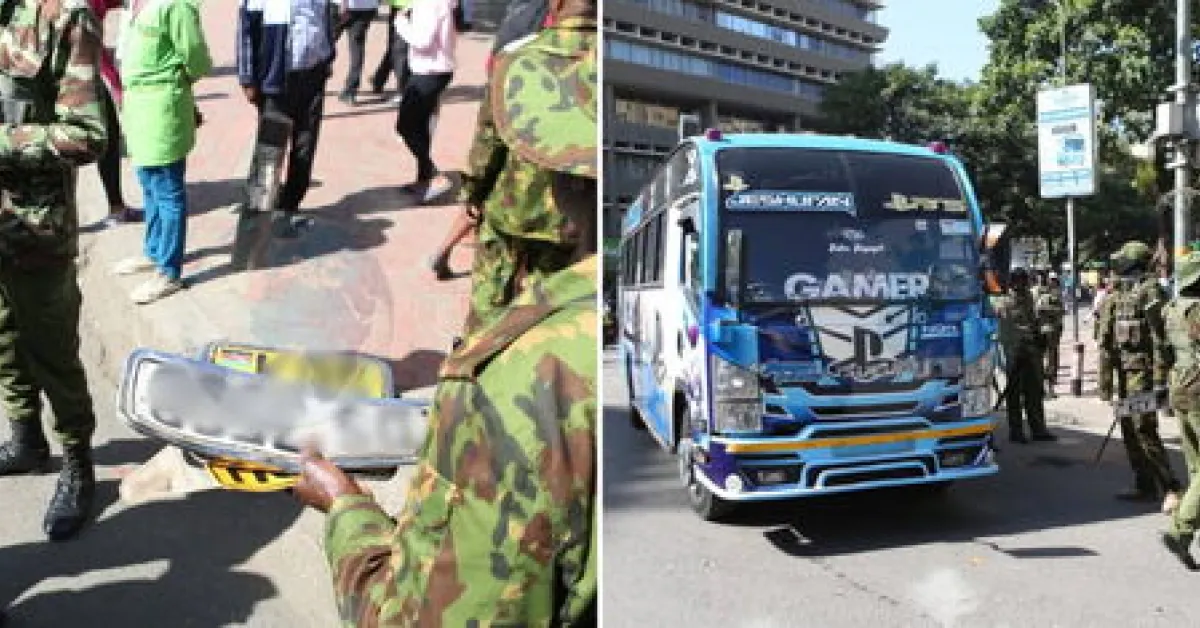
Nairobi was brought to a standstill on Monday after sections of matatu operators enforced a strike, blocking major roads despite an earlier announcement suspending the action.
Police moved to clear the city centre, removing number plates from vehicles obstructing traffic and towing them to police stations. Officers also used tear gas to disperse groups of protesting operators as authorities sought to reopen key routes into and out of the central business district.
The strike was first announced on 28 January following a series of attacks on public service vehicles. Matatu operators accuse boda boda riders of torching buses and minibuses, incidents that have heightened insecurity for both passengers and crews.
The Motorist Association of Kenya said at least nine vehicles have been destroyed in recent weeks, warning that mob violence has replaced lawful dispute resolution. On Sunday, the Federation of Public Transport Sector said the strike had been suspended to allow talks with authorities.
However, some groups, including Forward Travellers operators, proceeded with protests on Monday, erecting roadblocks in several parts of the city. Outering Road at the Kariobangi Roundabout was closed after vehicles were parked across multiple lanes, forcing traffic to a halt.
Feeder roads quickly became congested as thousands of commuters were stranded. Disruptions were also reported along Waiyaki Way, Tom Mboya Street, Ronald Ngara Street and the Thika Superhighway, where stones and buses were used to block traffic.
Police adopted firm measures to regain control. Vehicles found blocking roads had their number plates removed, a method used to immobilise offenders, before being towed away. Without plates, the vehicles were unable to resume operations, limiting further disruption.
Commuters from Eastlands reported being dropped along Jogoo Road, with touts saying matatus had been instructed not to enter the city centre. Workers, students and traders were left searching for alternative transport, while long queues formed on unaffected routes.
Motorists were advised to avoid the Kariobangi Roundabout and Outering Road, and significant delays were reported on routes from Uthiru, Kabete, Kinoo, Kikuyu, Nakuru and western Kenya. The events have highlighted wider challenges within Kenya’s public transport sector.
Operators say continued attacks on vehicles reflect gaps in security, while the strike has exposed the vulnerability of Nairobi’s transport network. Some transport workers, truck drivers and private motorists have expressed support for the action.











Add new comment